


Lem at Amazon


"The Futurological Congress" is one of the most daringly told stories about Ijon Tichy. Tichy is invited to a futorological convention in a Latin America republic shaken by revolution. Eventually Tichy is transferred to a world where in a grotesque convolution both the utopian and anti-utopian visions of the future have been realized. Mockery of futorology – as always with Lem – is accompanied by serious reflection about human disposition for discord with reality.
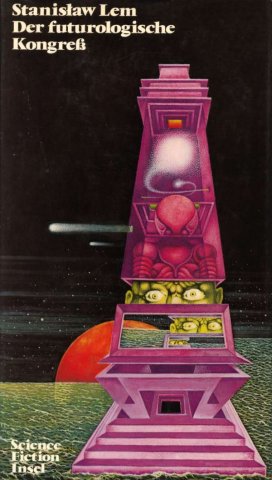
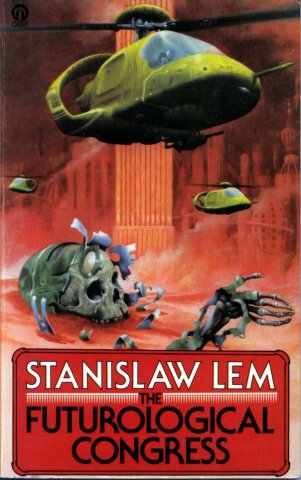





 THE EIGHTH WORLD FUTUROLOGICAL CONGRESS was held in Costa Rica. (...) The Hilton soared one hundred and six floors upward from its flat, four-story base. On the roof of this lower structure were tennis courts, swimming pools, solariums, racetracks, merry-go-rounds (which simultaneously served as roulette wheels), and shooting galleries where your could fire at absolutely anyone you liked - in effigy - provided you put in your order twenty-four hours in advance, and there were concert amphitheaters equipped with tear gas sprinklers in case the audience got out of hand.
 Tichy finds himself plumped into one of the conceptual futures that he and his colleagues are congressed to predict, inside a rebel-besieged Hilton. Well written and ingeniously translated, Congress yet has the feel of high-spirited finger-exercises: lots of ideas thrown off, a host of satirical targets, thin plotting. Like Dick, Vonnegut, and Barth, the book is one of those "fearless satires" of modern academic-government bureaucracies that SF course instructors will find more comfortable as assigned texts than some of Lem's scientifically demanding fiction.
 The Polish film director Wajda wanted to make a move based on The Congress. This perspective fascinated him - he imagined some monstrous hotel where he could set the plot... He even found a hotel of this kind... But in the end it came down to lack of funds, his vision was simply too expensive. That could have been interesting - to see how looking through this wonderful world one would start to see the ghastly one. I think this idea is still interesting, it would only require a Kubrick - in order to achieve a spiritual agreement between the author of the screenplay and the director.